

Rents reaccelerate as low supply tightens the market
Australia’s rental market has gained momentum again, with conditions tightening as available rental properties remain limited.
According to Cotality’s Quarterly Rental Review, national rents rose 1.3% in the December quarter, up from 0.9% in Q3. This lifted annual rental growth to 5.2% over the 2025 calendar year, showing that rental growth has reaccelerated after easing earlier in the year.
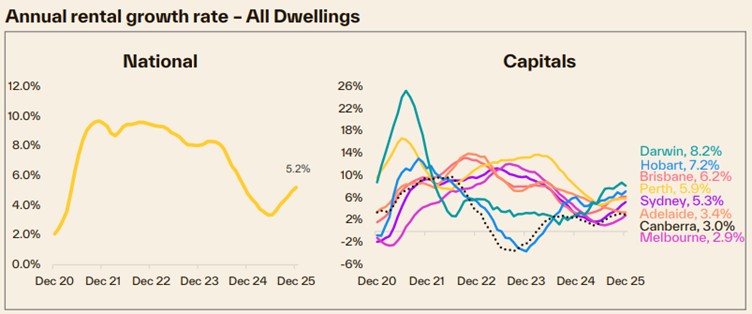
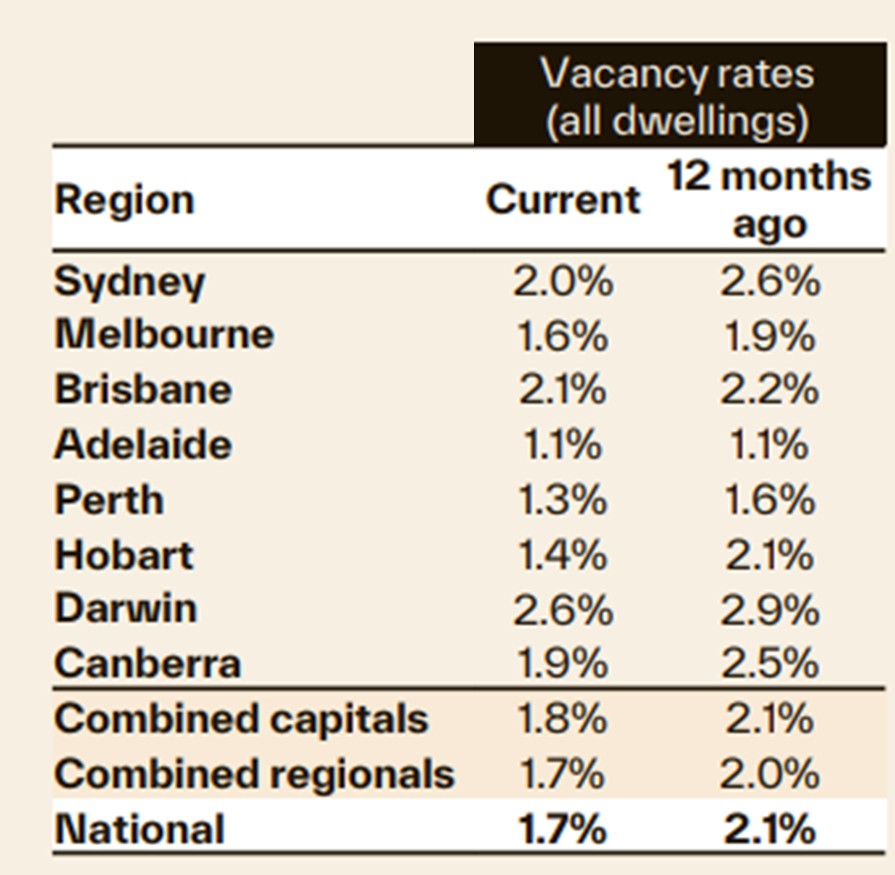
This acceleration is being driven by persistent supply shortages rather than a short-term lift in tenant demand. Rental listings were around 11% lower than a year ago and 17% below the previous five-year average. Vacancy rates also tightened further, falling from 2.1% to 1.7% over the year, and remain well below the pre-COVID decade average of 3.3%.
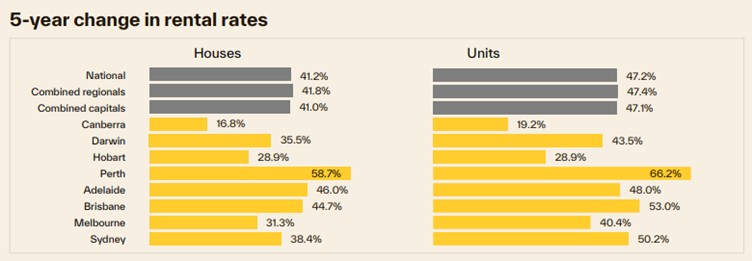
Over the past five years, national rents have surged 42.9%, adding around $204 per week to the median rental value. This highlights how sustained supply constraints have reshaped the rental market, with fewer properties available and competition among tenants continuing to support higher rents.
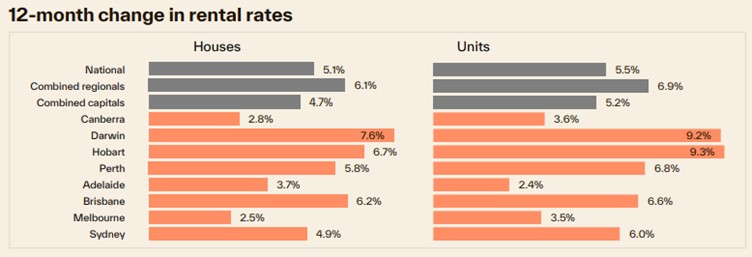
Rental growth has not been uniform, however. Unit rents rose 5.5% over 2025, slightly ahead of houses at 5.1%. Regional rental markets also continued to outperform the combined capitals, recording growth of 6.1% compared with 4.7%. These differences show why broad assumptions can be misleading, as rental outcomes vary by property type and location.
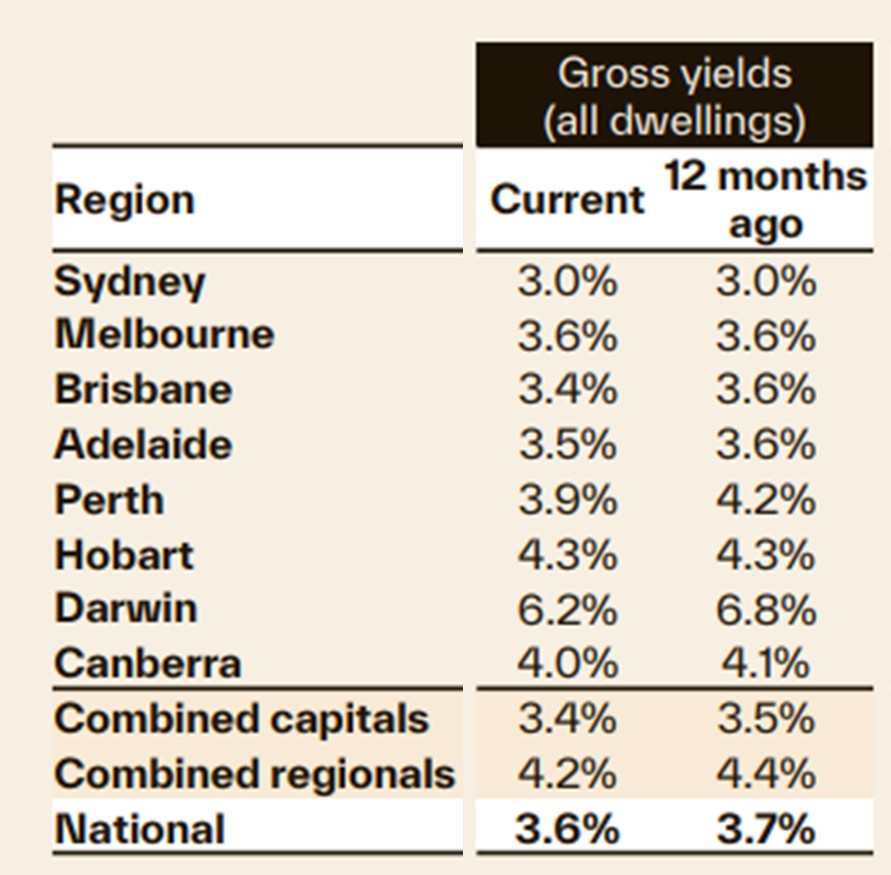
At the same time, higher property prices are affecting yields. National home values rose 8.6% in 2025, faster than rents, which pushed gross rental yields down to 3.56%, their lowest level since September 2022. While yields remain above pandemic lows, the data highlights the importance of balancing rental income with long-term capital growth rather than focusing on one alone.
With rental demand still strong and supply tight, careful property selection matters more than ever. Well-researched investments with solid rental fundamentals and long-term growth potential are best placed to perform in these conditions.