

Regional vs city property: What the data says
Recent data shows regional property markets are continuing to record solid price growth and strong rental yields, often beating their capital city counterparts. For investors, this might raise the question: should you buy in the city or further afield?
Over the five years to January 2026, combined regional markets have delivered impressive growth of 57.4%, according to Cotality. This is comfortably ahead of capital cities at 42.8%.
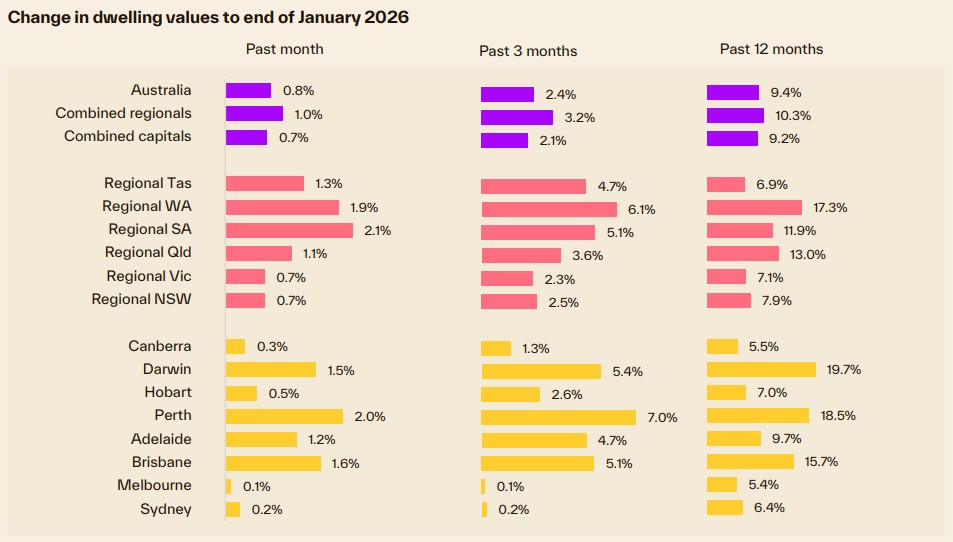
While some of that growth was seen during the pandemic, when many people moved out of cities for a sea- or tree-change, more recent data shows regions continue to outperform. Over the 12 months to January 2026, regional dwelling values grew 10.3% compared to 9.2% for capital cities.
What’s driving this growth?
Several trends are driving this sustained regional growth:
- Lifestyle migration: The desire for space and a slower pace remains high, even after the pandemic surge. More Australians are looking for space, affordability and lifestyle opportunities outside capitals.
- Affordability pressures: High entry costs in major cities are pushing buyers toward regional areas where they can get more property for their money. The median dwelling value in January 2026, for example, was over $250,000 cheaper in the combined regions at $743,672 compared to $1,002,520 in the capitals.
- Remote and hybrid work: Remote work has moved from an emergency measure to a more permanent corporate fixture, making living further from city offices viable. With the introduction of legislation like Victoria’s proposed work from home laws, this may become an even bigger driver.
- Infrastructure improvements: Better transport links and regional amenities make these areas more accessible and attractive.
Weighing your options
Regional markets can offer higher gross yields, lower entry prices and strong demand in key lifestyle and employment hubs. They provide excellent diversification opportunities beyond capital cities.
However, performance can vary dramatically between towns. Regional markets also have smaller buyer pools when it’s time to sell and greater reliance on local economies, which can increase volatility.
Capital cities provide larger, more liquid markets with historically strong long-term capital growth. Their diverse employment bases and consistent population growth offer stability. But higher entry costs, potentially lower yields and intense buyer competition can create genuine barriers.
The verdict
Data shows that both regional and city markets offer opportunities, but the right choice depends on your strategy, goals and risk tolerance. Whether you are a first-time investor or building a diversified portfolio, focusing on sub-markets with strong fundamentals, solid rental demand and realistic yield potential is key.