
The gap between Australia’s property markets has never been wider
Australia’s property markets are no longer moving in unison, and the gap between them has grown wider. Cotality’s April 2026 Monthly Housing Chart Pack highlights just how different conditions have become across the country.
At a national level, dwelling values rose 2.1% over the quarter and 9.9% annually to March. However, that headline figure hides a clear split between outperforming and slowing markets.
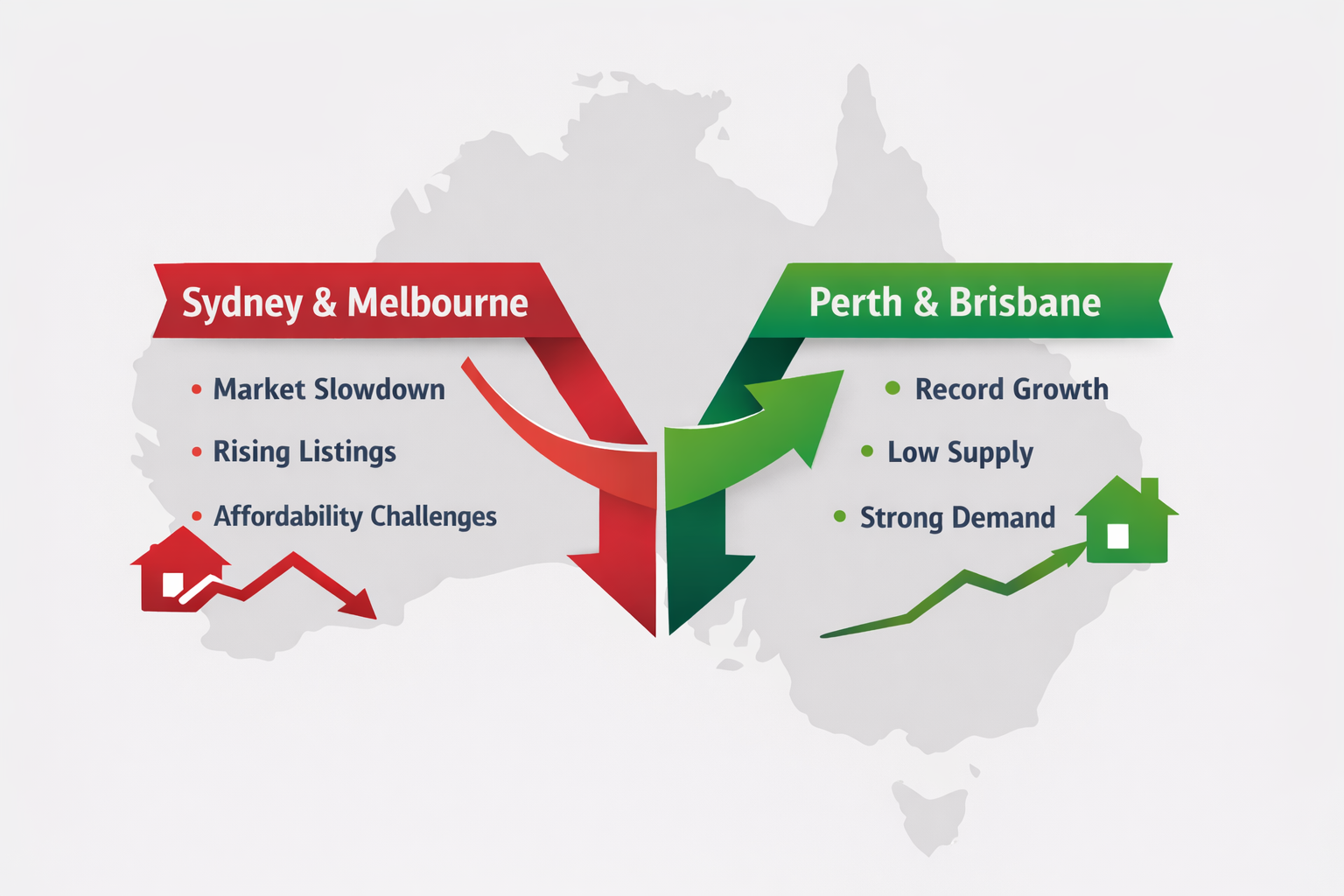
On one side, Perth and Brisbane continue to break records. Both markets have seen home values more than double since 2020, driven by a persistent shortage of housing relative to population growth. Queensland accounted for over 25% of population growth but delivered less than 20% of new housing, while Western Australia saw a similar imbalance. As a result, competition remains intense, with homes in Perth selling in around nine days.
South Australia remains somewhat of an outlier. The state recorded strong home value growth of more than 90% over the five-year period, despite dwelling completions remaining broadly aligned with population growth.
On the other side, Sydney and Melbourne are starting to show early signs of a downturn. Auction clearance rates have softened, listings are rising, and buyers are increasingly constrained by affordability and borrowing capacity. While NSW remains undersupplied, higher price points are limiting what buyers can do, and recent value growth has begun to ease.
What’s driving this divergence?
Affordability is at the centre of it. With interest rates hovering around 6%, home loan serviceability remains a key challenge, particularly in higher-priced markets. As borrowing capacity tightens, buyers are being pushed towards more accessible markets.
At the same time, supply remains tight in those more affordable regions, intensifying competition.
Overlay that with strong population growth, ongoing infrastructure investment, and diverse employment opportunities, and it becomes clear why demand continues to hold up in markets like Brisbane and Perth.
What this means for property investors
Chasing the “big name” markets may not be the most effective strategy. The strongest results are often found in areas where demand is underpinned by real fundamentals and supply remains constrained. In other words, it is not about familiarity or reputation, but about what is actually driving growth.
This is why we encourage investors to focus on high capital growth potential and solid rental yield when selecting markets. With national rental vacancy rates at just 1.6% and gross yields rising to 3.57%, well-chosen investment properties can deliver strong rental income and long-term growth outcomes over time.
In a market this divided, having the right strategy matters more than ever.